
Embrace the Tumult
Resilience intelligence, built in Rust. Test your systems, keep the evidence in one place, and see what it means.
Latest release: 3.0.3
How it works
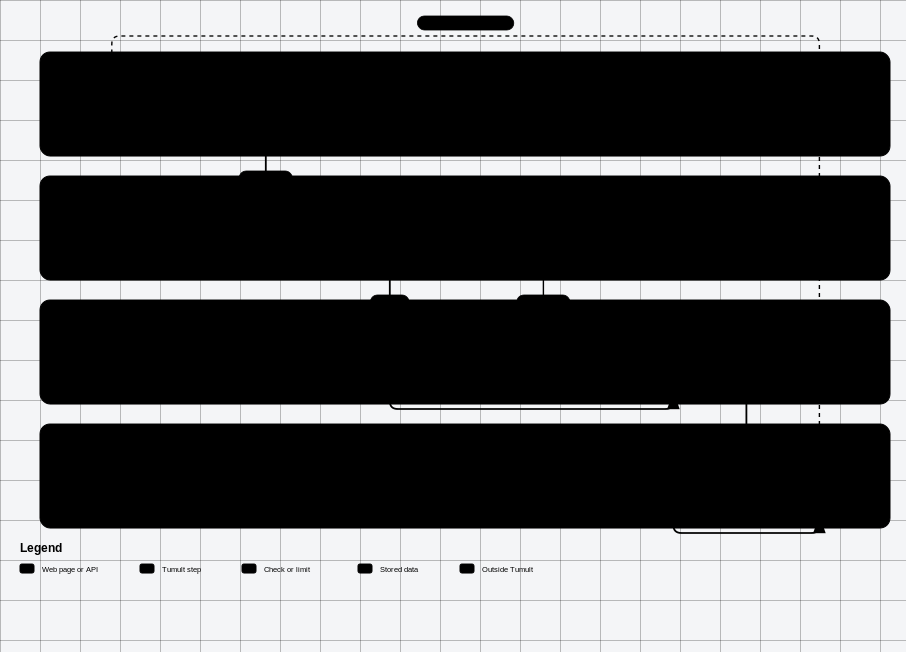
Evidence goes in. Answers come out. Each answer points to the next test.
↺ A risk becomes the next experiment. Its run becomes new evidence.
What you get
Chaos testing is one source of evidence among several.
Many kinds of evidence
Chaos experiments, load tests, telemetry from your services, entity events and manual records of exercises.
Pick a fault, run it
Choose from 92 actions in 16 plugins, for databases, Kafka, containers, Kubernetes, clouds, networks, hosts and clocks. A wizard writes the experiment file.
Approvals, stop and audit
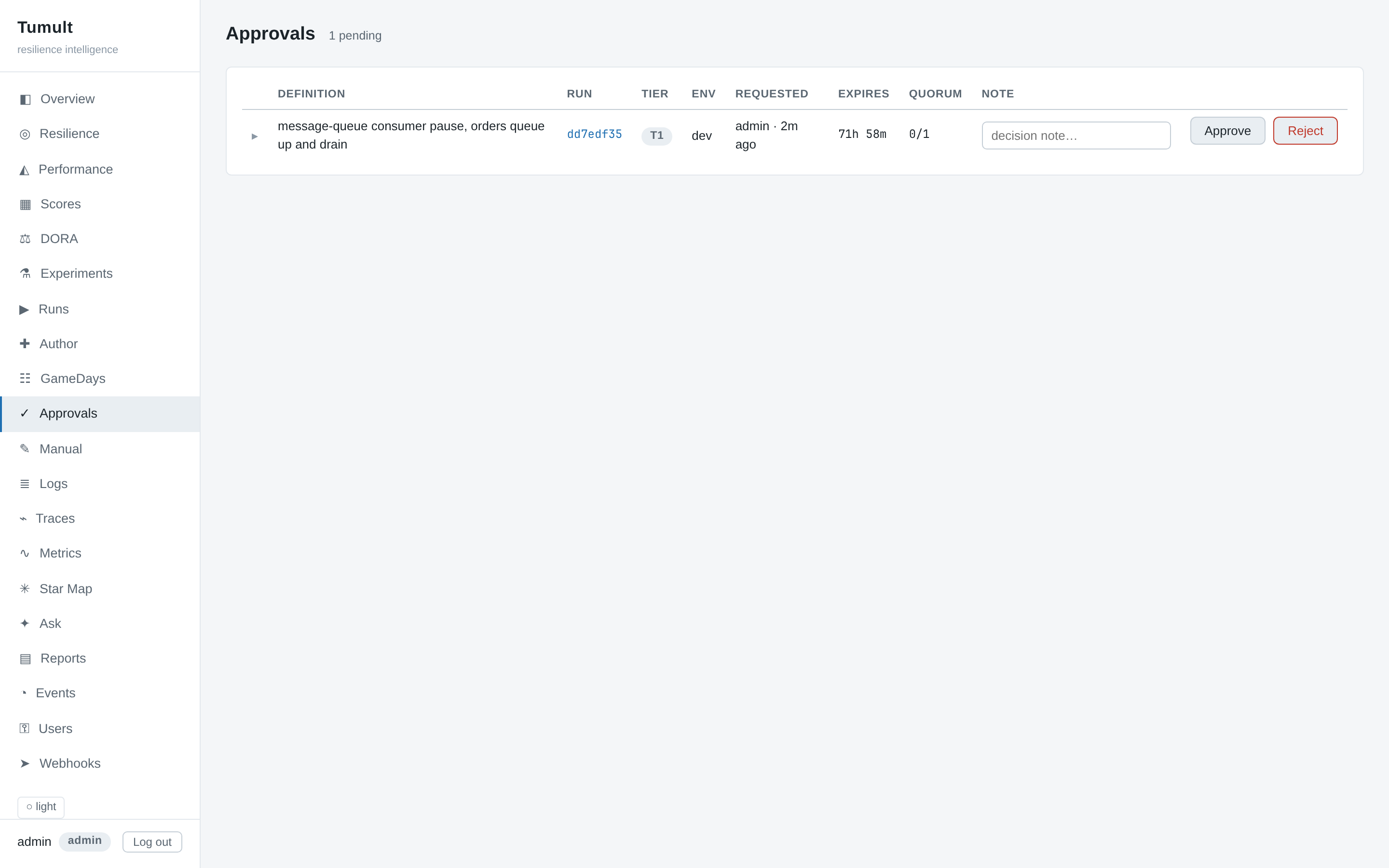
Every run gets a risk tier, T0 to T3. Risky runs wait for a second person. Two clicks stop everything. Every action goes into an audit trail that shows any change.
One lake
The daemon takes in traces, metrics and logs over OTLP and OTel-Arrow and keeps them in one DuckDB database. Setup guide.
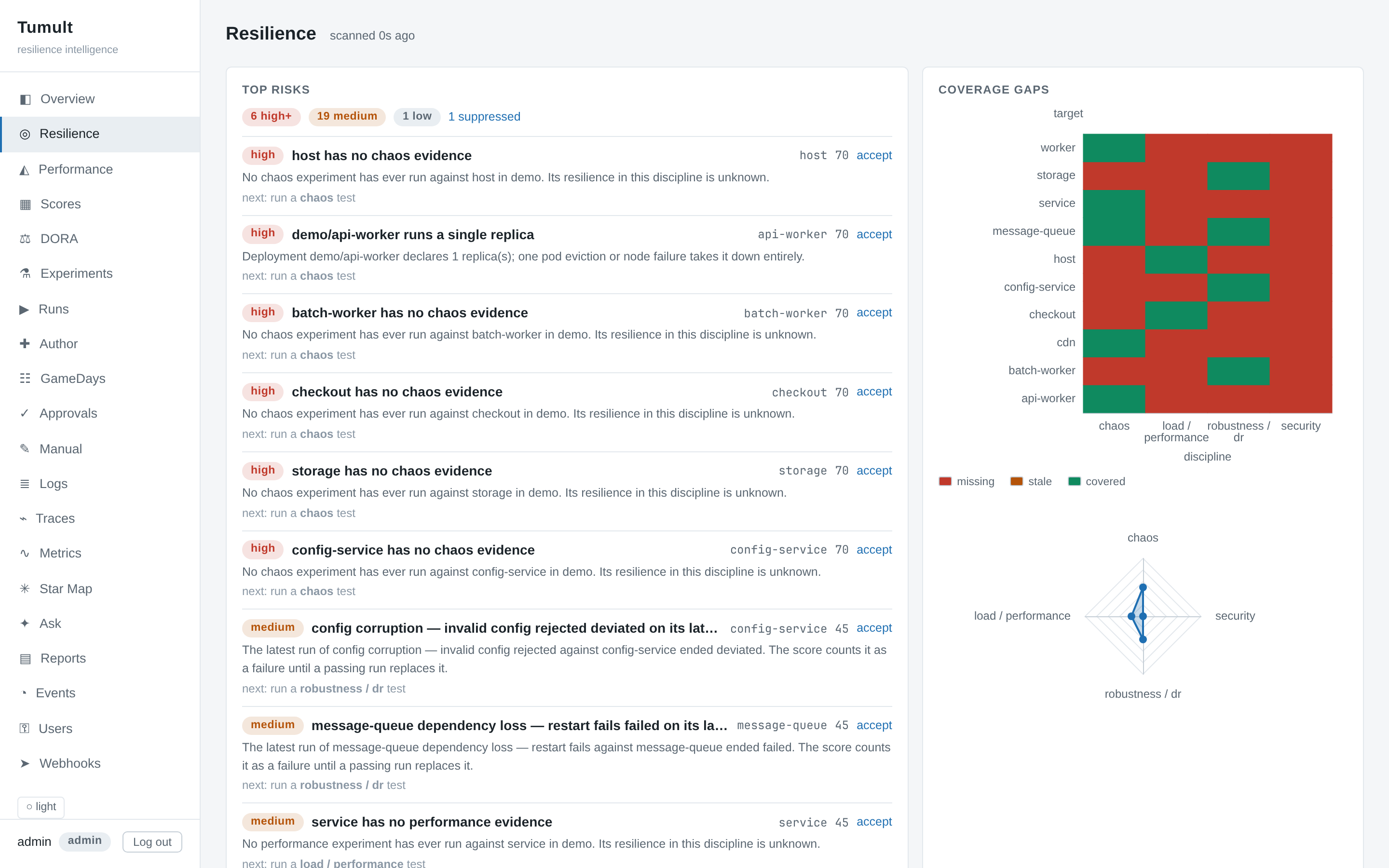
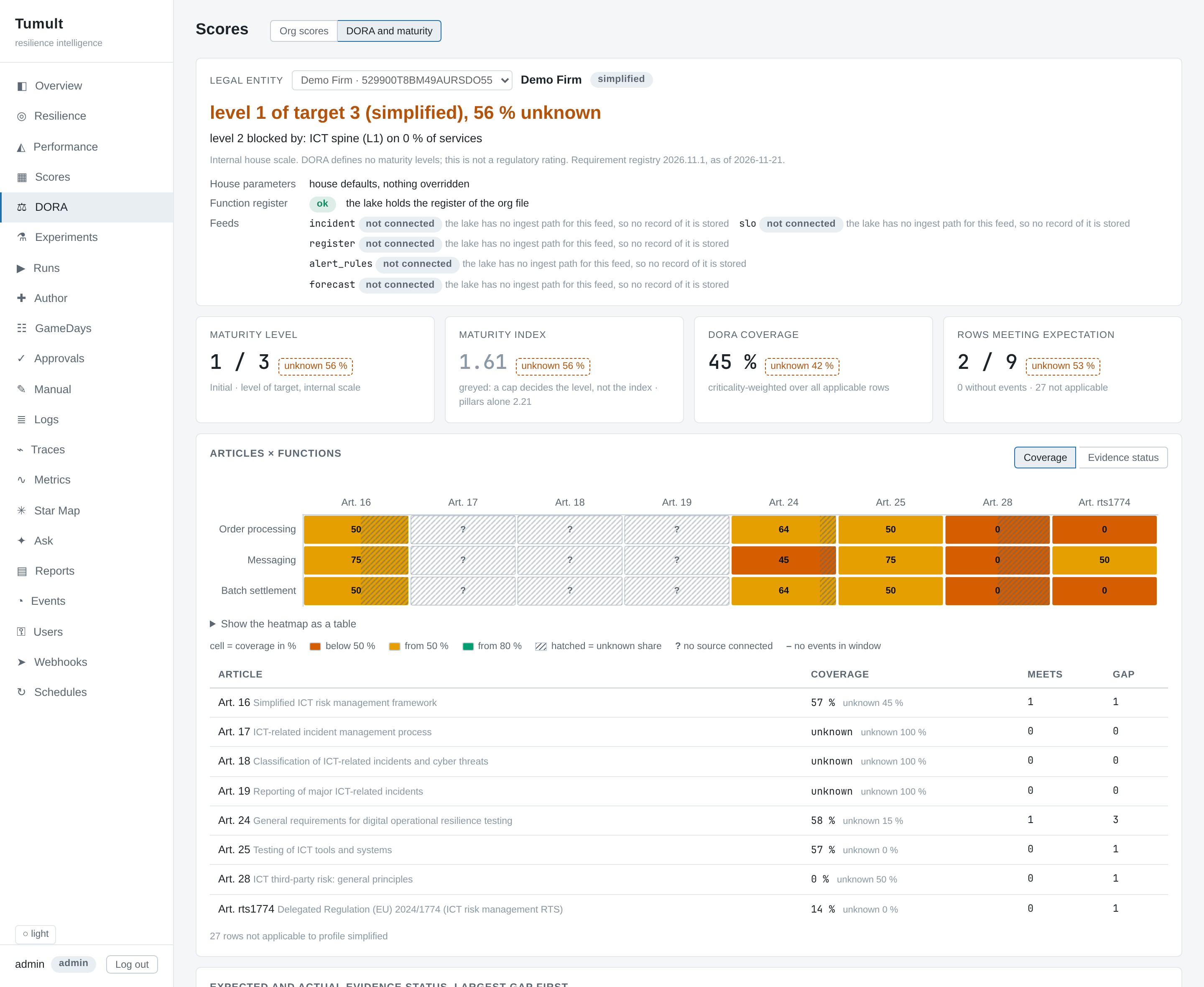
Resilience, scores and DORA
Ranked risks without running a fault. Scores per team and company. A DORA score that shows what evidence exists. It does not say that you comply.
Verdicts and a CI gate
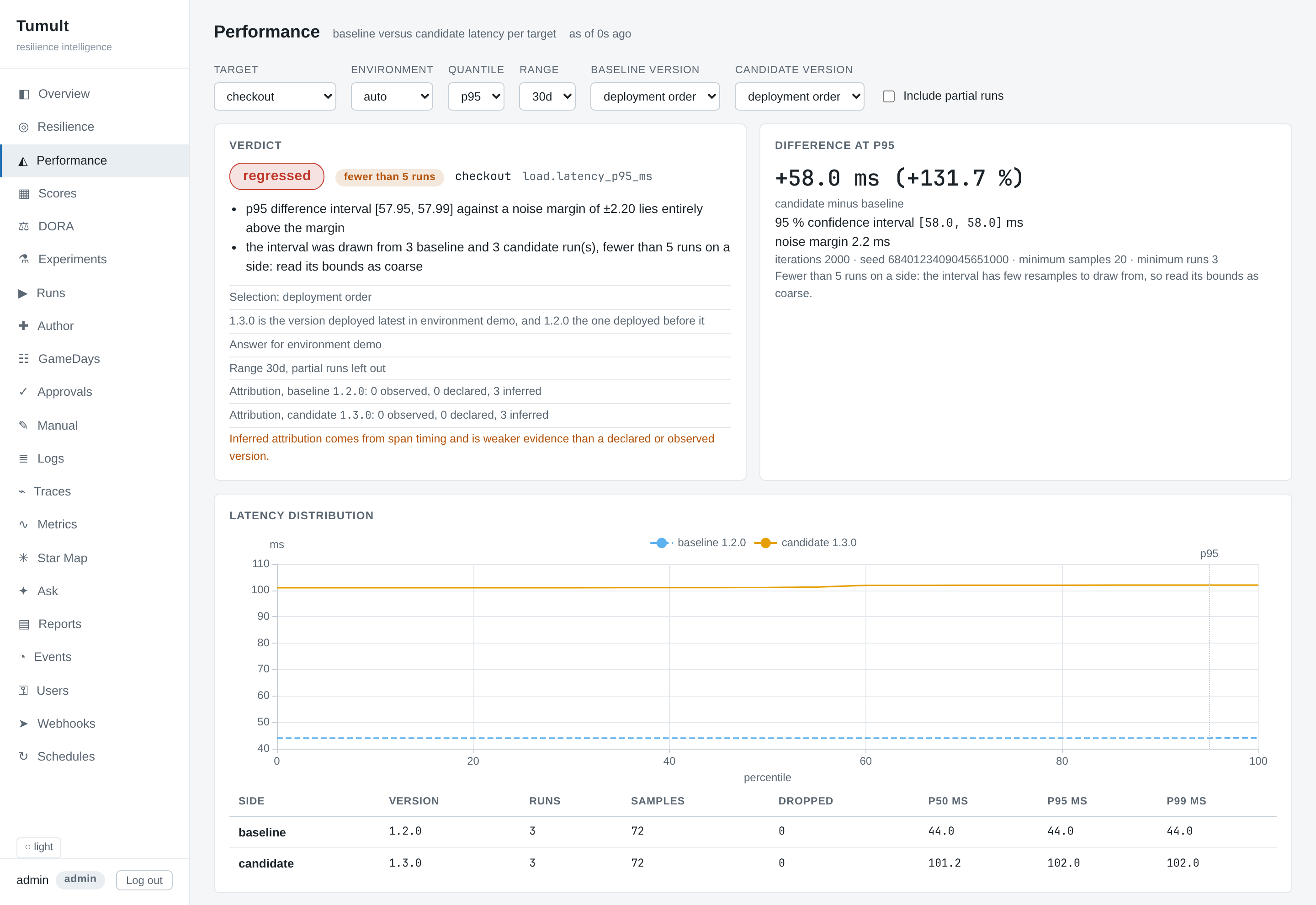
Met, breached or not enough data, for each objective. Version against version for performance. tumult gate gives pass, warn or fail to a pipeline.
Forecasts and impact
The expected range of a metric, how far a fault pushed it, and how long it took to come back. Works offline.
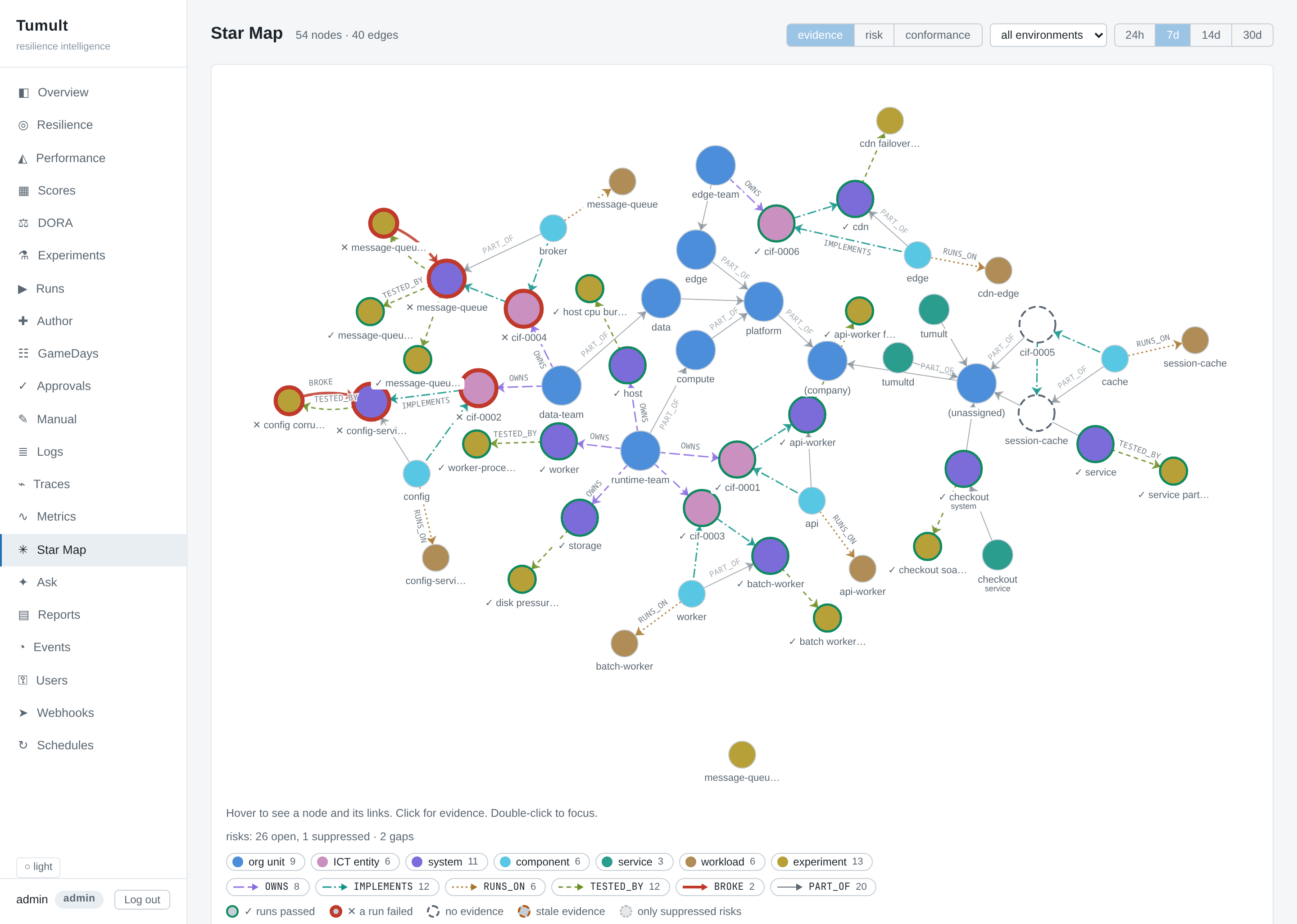
Star Map
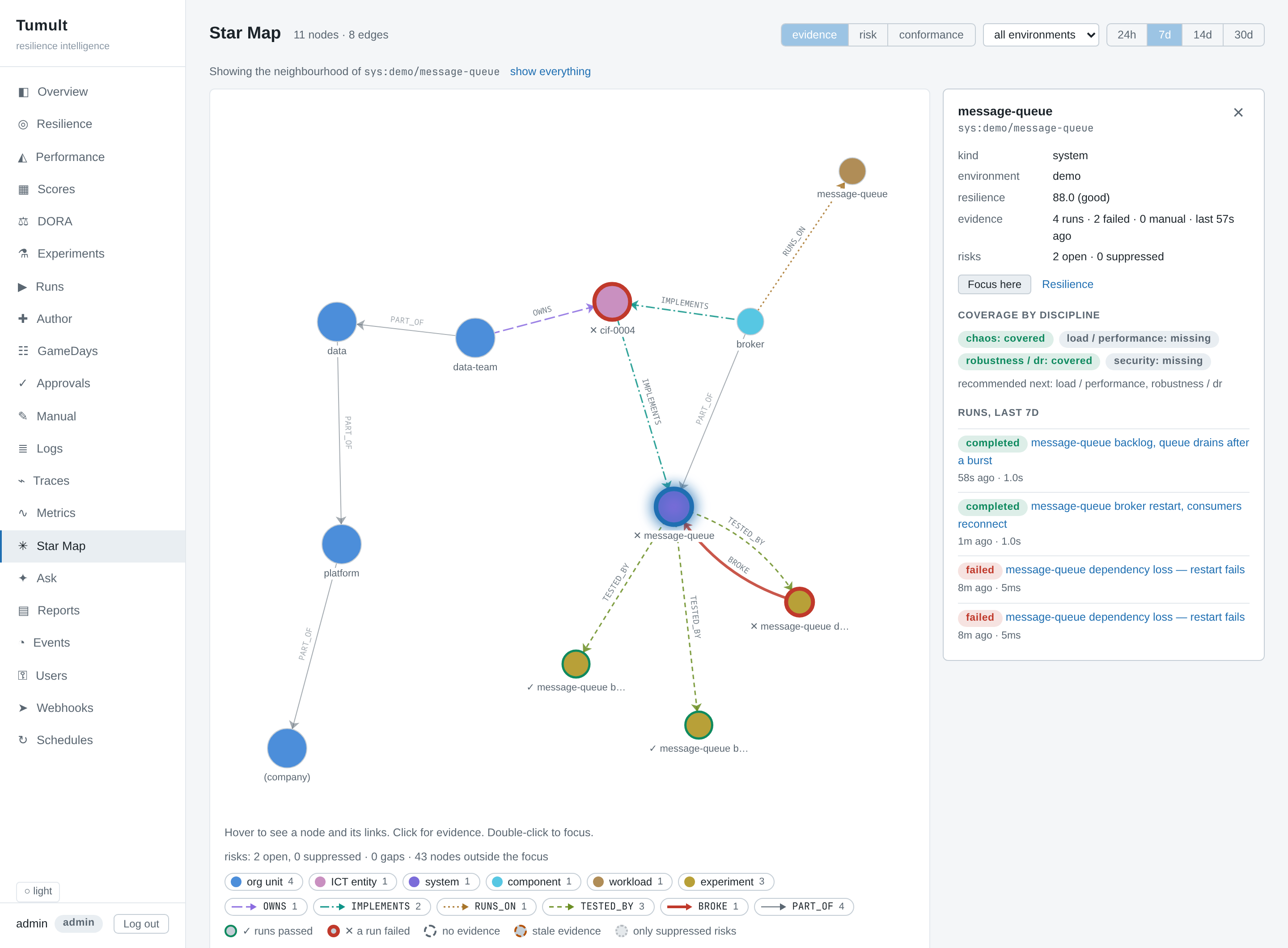
The Star Map shows organisation, systems, services and workloads as one graph. Colour it by evidence, risk or telemetry quality.
Reports
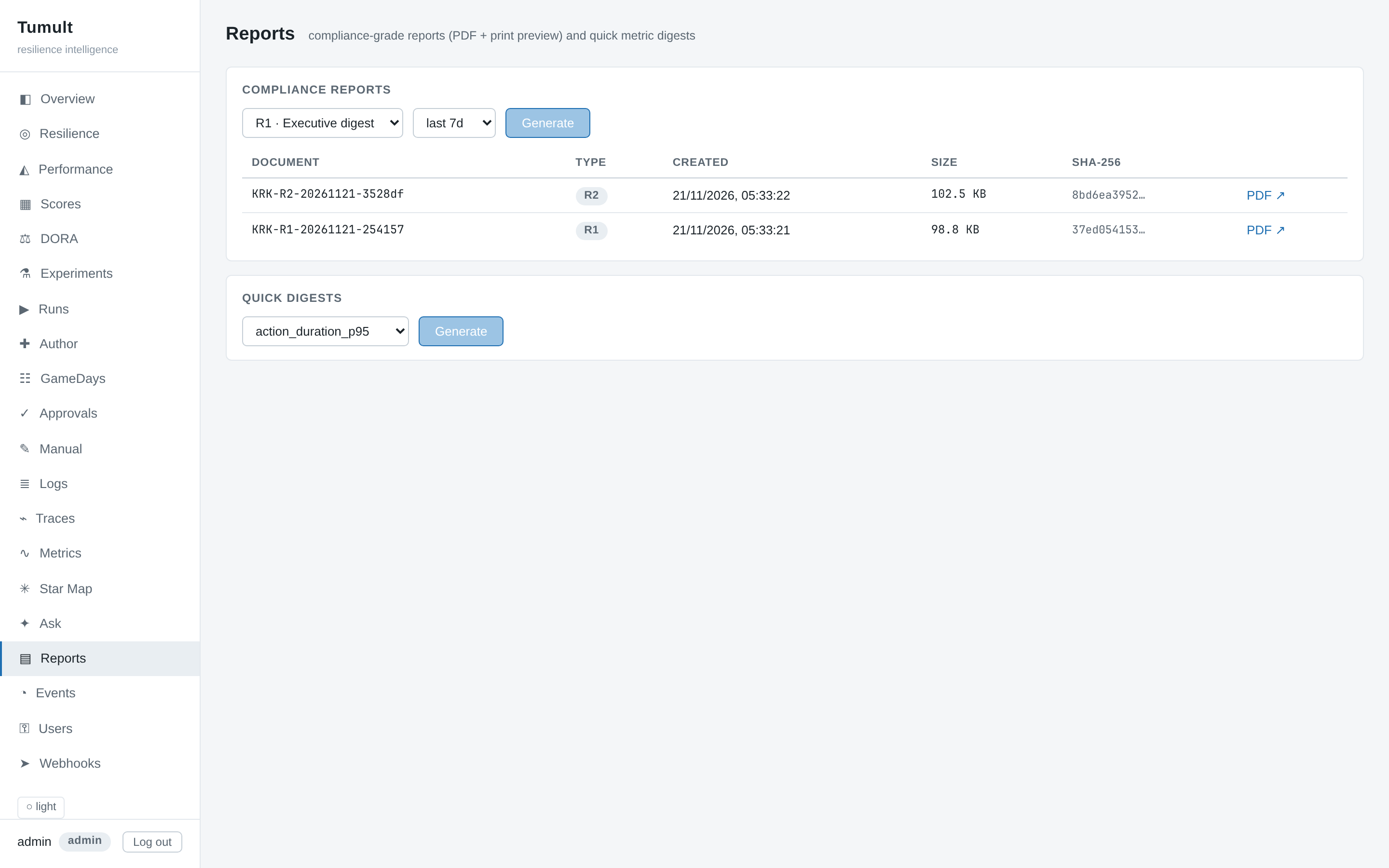
PDF reports for management, audit and the team. Evidence mapped to DORA, NIS2, ISO 27001, SOC 2 and more. Reports summarise evidence; they do not certify compliance.
AI agents
40 MCP tools let an agent run experiments, query results and suggest the next test. Tumult can also inject faults into AI agents themselves.
Built to run anywhere
Single binary
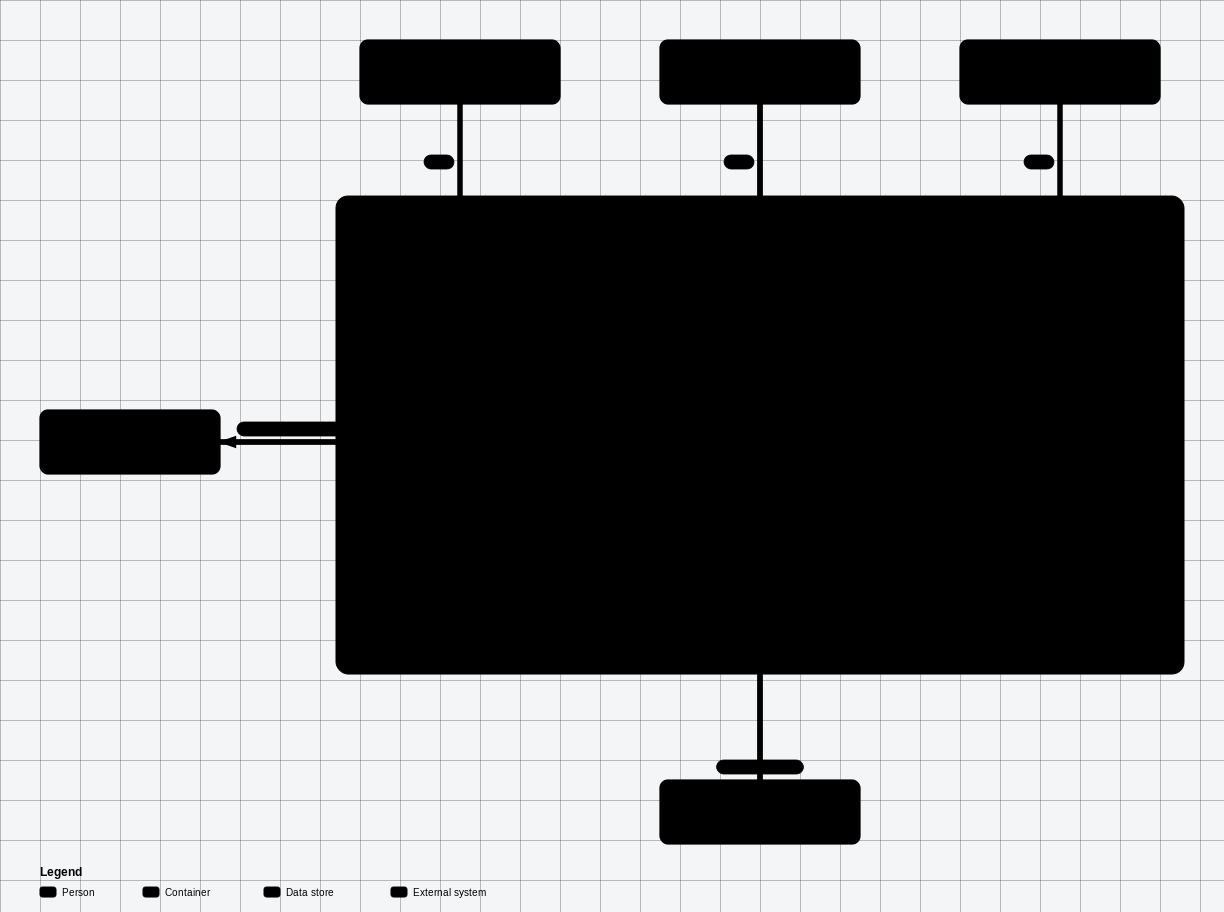
The daemon holds the lake, the schedulers and the web UI in one file. The CLI is another. Built for macOS and Linux.
Native OpenTelemetry
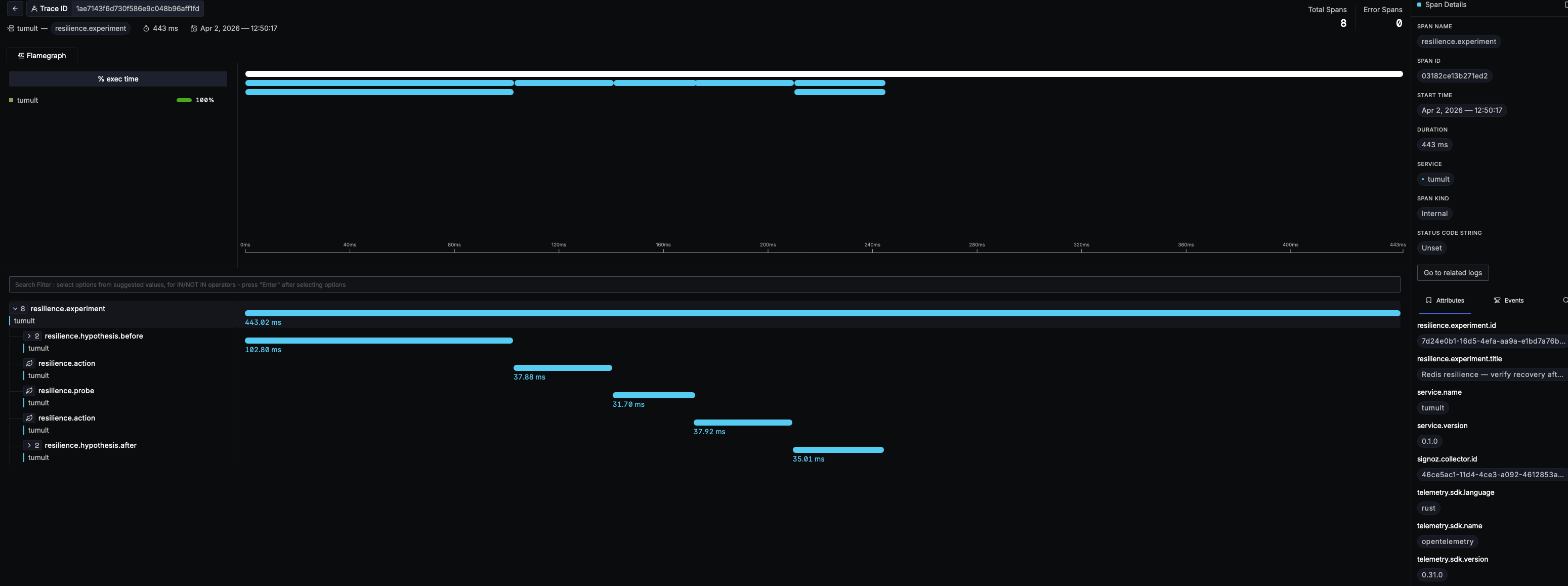
Every step of a run is a span. Send it to SigNoz, Jaeger or any OTLP backend. Logs are structured JSON.
Memory safe
Safe Rust, with six small unsafe blocks, all for child processes. Strict lints and a dependency audit on every commit.
GameDays
Run a group of experiments as one scored campaign, with one command.
Docker images
Ready on GHCR. No Rust needed: docker pull ghcr.io/mwigge/tumult.
Works with your stack
An OpenTelemetry Collector in front, SigNoz or Grafana behind. No custom build.
See it in action
A GameDay in one command
$ ./scripts/gameday-demo.sh

Targets:
  ✓ postgres
  ✓ redis
  ✓ kafka

── Discovering chaos capabilities ──
  Plugins: 16
  Actions: 92

── Running Q2 PostgreSQL Resilience GameDay ──
  Experiments: connection kill, container pause, CPU stress, memory stress
  Compliance: DORA EU 2022/2554 Articles 11, 24, 25

  GameDay: Q2 PostgreSQL Resilience Programme
  Status: COMPLIANT
  Experiments: 4/4 passed
Compliance reports are evidence summaries, not legal or audit attestations.
See it running
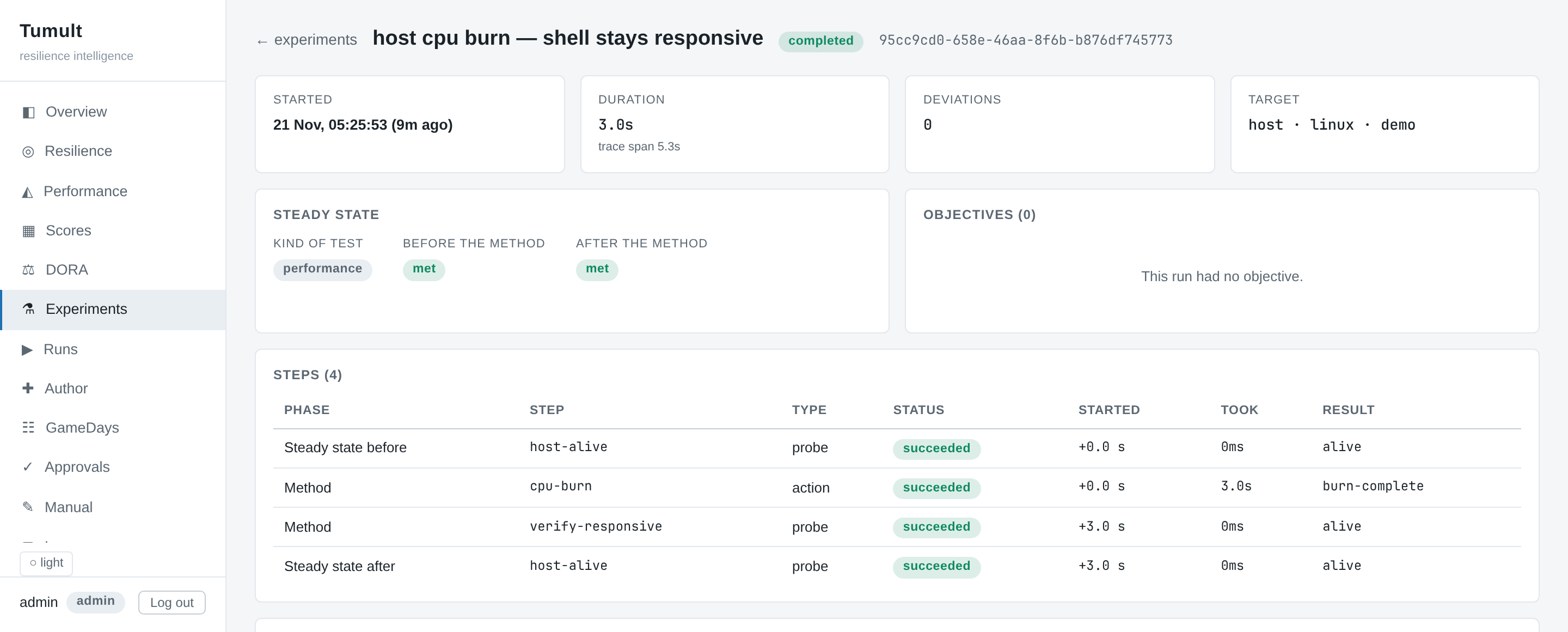
The web UI on the demo data. Take the full tour in the platform walkthrough.
How it is built
Native observability
Every probe, action and rollback is a span. Set one variable, OTEL_EXPORTER_OTLP_ENDPOINT, to send them to your backend.
Ready to start?
One command to install. One compose file to see it all on demo data.